

What problem does Advanced Search for Records Page solve?
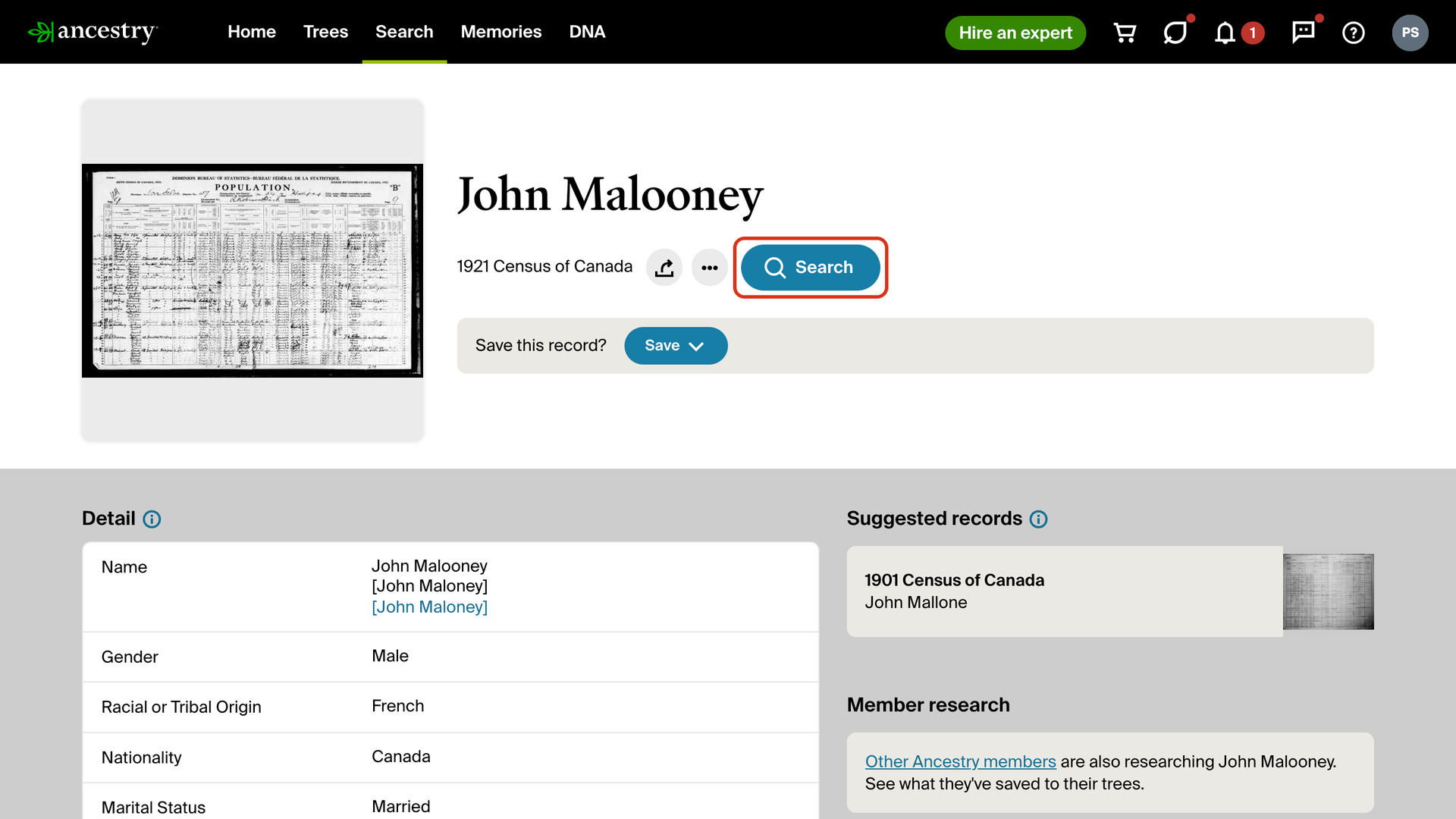
Advanced Search for Records Page adds a Search button to Ancestry record pages that looks for the person on seven genealogy websites, with their details already filled in. Without it, you would open each site and retype the name, dates and places from the record yourself.
On a passenger list, or a record that names both parents, it also adds searches on Ancestry for the people around them: others with the same surname on the same voyage, everyone on that voyage, and the parents’ other children. Without it, you would page through the whole list or fill in Ancestry’s search form yourself.
How does Advanced Search for Records Page work?
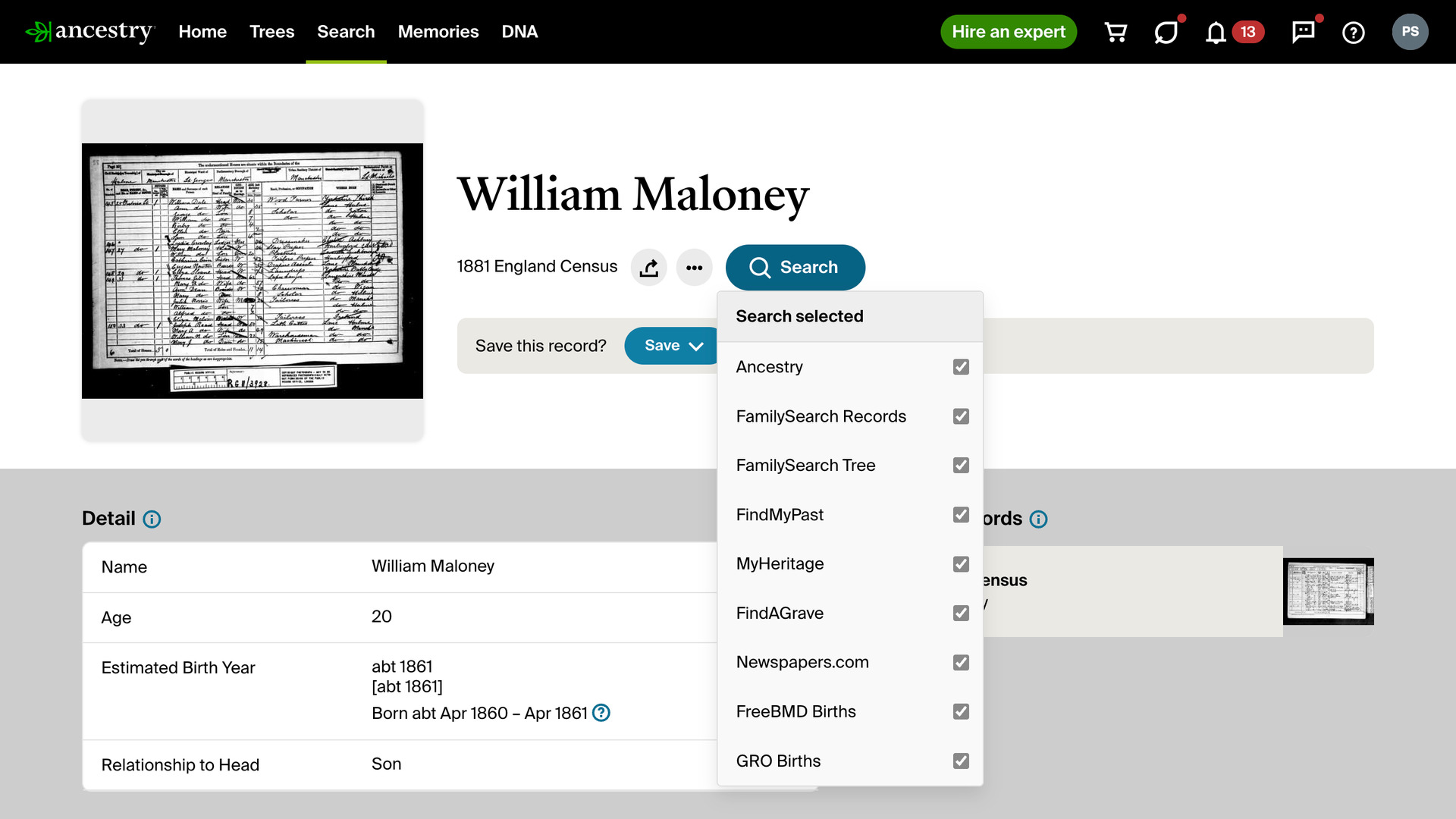
The Search button sits at the top of the record page, beside Ancestry’s share and ••• buttons under the person’s name. It appears on records whose details list the person’s name, which covers most transcribed records. Point to it to open a menu of genealogy websites.
Click any of these websites in the menu to open its search in a new tab:
- Ancestry
- FamilySearch Records
- FamilySearch Tree
- FindMyPast
- MyHeritage
- FindAGrave
- Newspapers.com
Each search is filled in from the record: the person’s name, the birth and death years, and the places of birth, residence and death, plus the spouse’s name if the record has one. A site uses only what its search form accepts.
When the record gives a birthplace and a birth year, or a baptism place and date on a baptism record, the menu also lists the civil birth index for that place below Newspapers.com: FreeBMD Births and GRO Births for England and Wales, ScotlandsPeople, IrishGenealogy, and the registries of New Zealand and several Australian states and Canadian provinces.
Most birth indexes search up to two years either side of the birth year, since census ages are often a year or two out. MB Vital Stats Births searches only that year. Tas Names Births searches by name with no year limit.
An index is left out if the record has no birthplace or birth year, or the years it would search are all outside the index. FreeBMD and the GRO both start in 1837, so a birth about 1836 still gets them, searching from 1837.
Scotland moved from church registers to statutory registration in 1855. For a birth year from 1853 to 1856 the menu lists both ScotlandsPeople Births and ScotlandsPeople Church Births, so both registers are searched.
A wife or a widow gets no birth index. The record gives her married surname, so the index would list other women of that name. Her other searches stay in the menu.
Each website has a checkbox beside it. All websites and birth indexes are selected to start with. Click Search selected at the top of the menu to search your chosen sites together, each in its own tab. The menu remembers your choices for the next record you open.
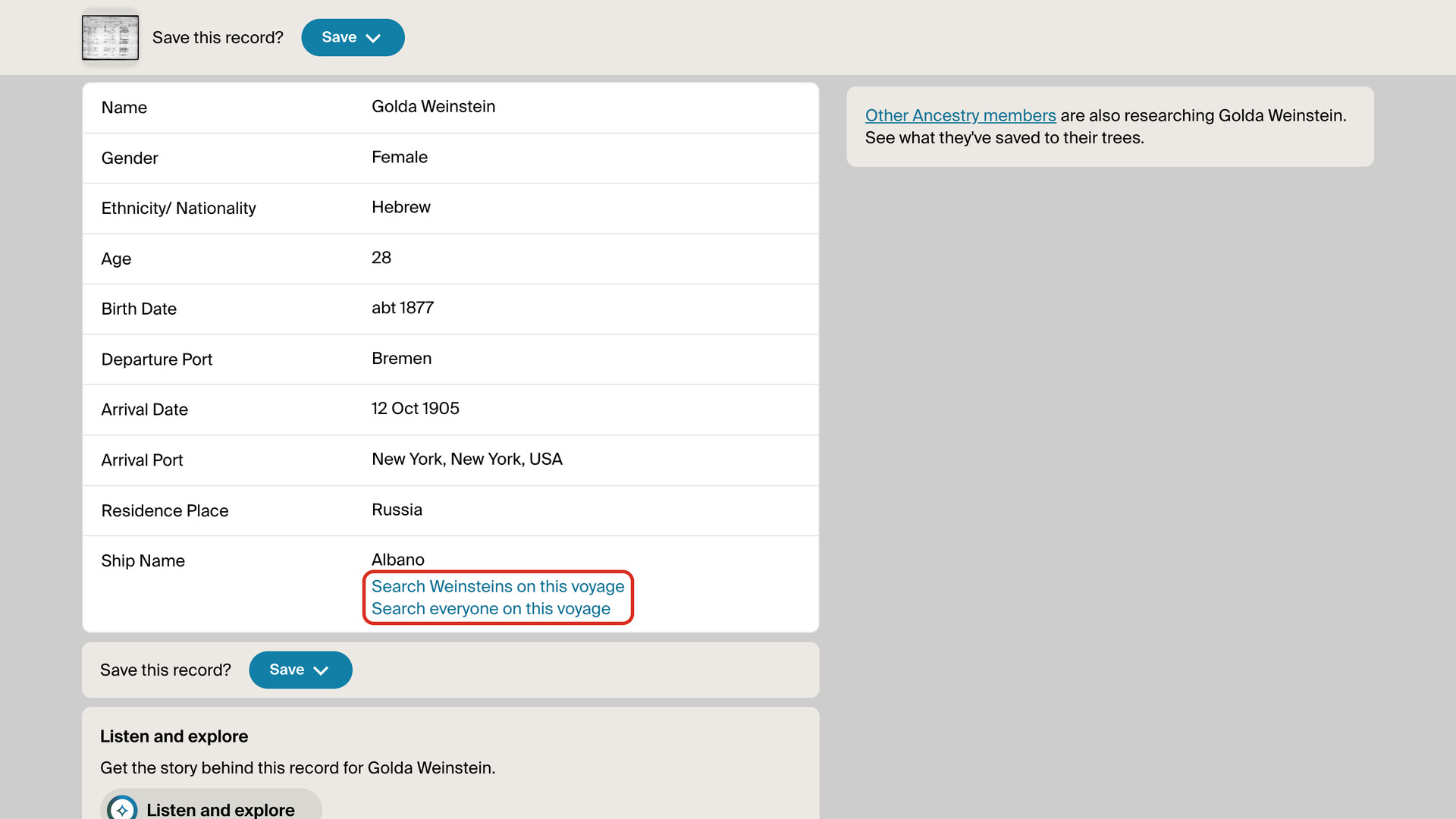
Some records also get searches on Ancestry itself, as links in the record’s details under the fact each one uses. Each searches the same collection as the record and opens in a new tab. They sit apart from the Search menu, which searches for this person on other websites.
On a passenger list, two links sit under the ship’s name, one a line. Search Weinsteins on this voyage, named for the record’s surname, lists the passengers with that surname on the same ship on the same day, close spellings included. Search everyone on this voyage lists every passenger on that sailing.
The voyage links are on the New York, Canadian, Massachusetts, UK outward and Hamburg passenger lists. An arrival list searches by the day the ship arrived, and a departure list by the day it left. A record without a full date gets no voyage links, since a month or a year can hold several sailings.
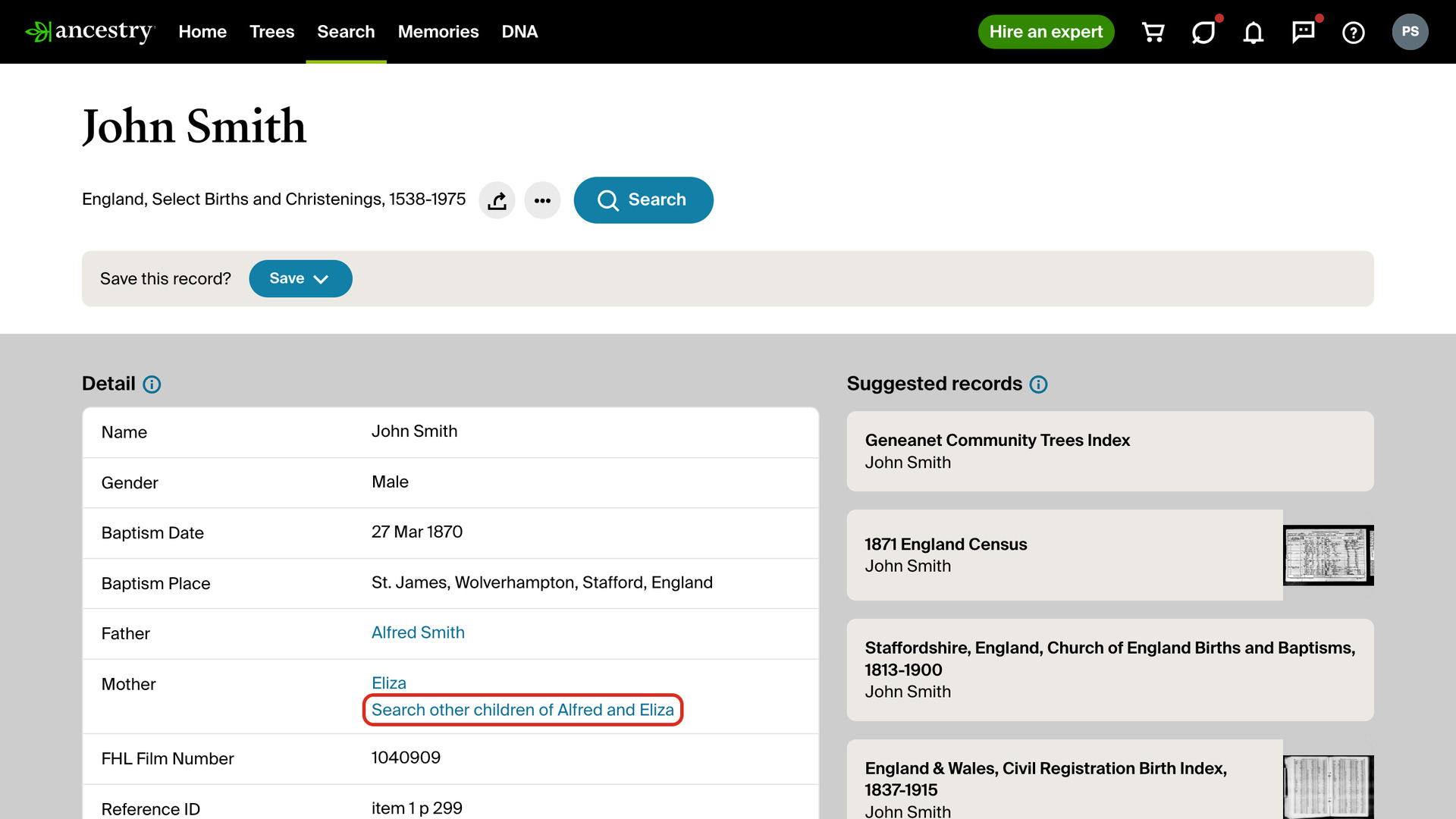
On a record that names both parents, such as a baptism, Search other children of Alfred and Eliza sits under the mother’s name. It lists the children of a father with that name and a mother with that first name, born within ten years of the person when the record gives a year. Her surname is left out, since a record may give her maiden or married name.
How do I use Advanced Search for Records Page?
- In the Genealogy Assistant pop-up panel, make sure Advanced Search for Records Page is turned on.
- Open a record on Ancestry, for example from your search results.
- Point to Search at the top of the record. The menu of websites opens.
- Click a website. Its search opens in a new tab, filled in with the person’s details.
- To search several websites at once, select the ones you want and deselect the rest, then click Search selected. Each site you selected opens in its own tab.
- On a passenger list, click a link under the ship’s name to search that voyage. On a record that names both parents, click the link under the mother’s name to find their other children.
Related features
- Add Advanced Search to Profiles: Search anyone in your Ancestry tree on eight genealogy websites from their profile, with civil registration indexes beside each place and an age added to the death date.
- Add Birth Ranges to Census Records: Shows the dates a person was born between on Ancestry census records, from their age and the census day, and flags a census that cannot be theirs.
- Text Records Name Auto-fill: Fills in the Name box when you save a transcribed record to your tree, taking the name from the record so there is nothing to type or copy.
Advanced Search for Records Page is a feature of Genealogy Assistant.
Genealogy Assistant is an extension for Google Chrome, Mozilla Firefox, Microsoft Edge and Apple Safari which supercharges your family history research by adding over 100 custom features to popular genealogy websites like Ancestry, MyHeritage, FamilySearch, FamilyTreeDNA and more.
Install Genealogy Assistant for Google Chrome | Install for Mozilla Firefox | Install for Microsoft Edge | Install for Apple Safari